

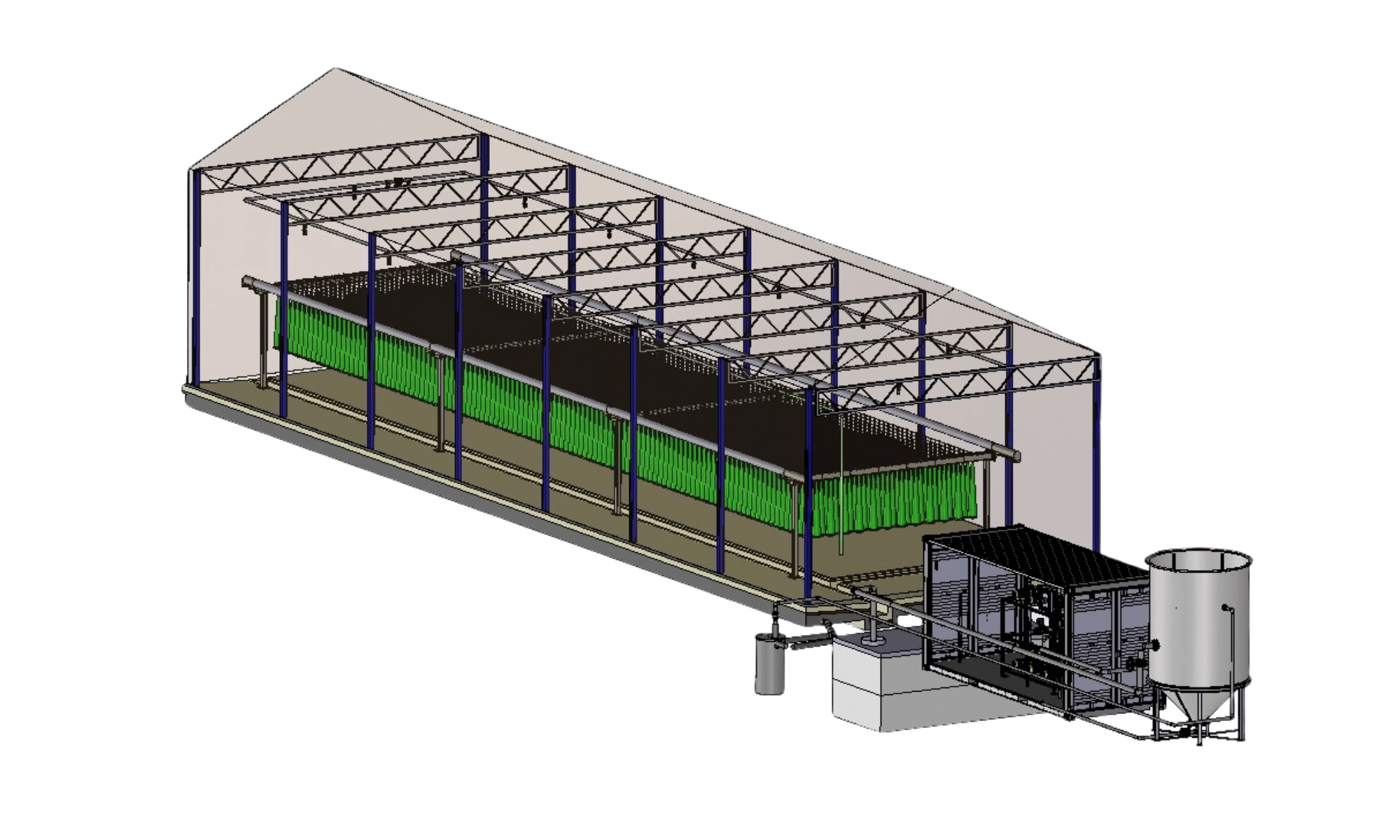
AlgaFilm Technologies Ltd.’s proprietary Algae Forest technology evenly distributes wastewater across an engineered cone bed via a controlled irrigation process. As the wastewater passes through the cone bed, a mixotrophic algae-bacteria biofilm attached to the cones reduces BOD, ammonia, nitrogen, and phosphorus. This allows for efficient wastewater treatment while also growing algae at higher densities with a smaller footprint than suspended systems. The cone bed’s design maximizes solar exposure per square foot, improving both algae growth and CO₂ capture. Treated water then drains off for reuse or further processing. An automated system harvests accumulated biomass weekly, which can then be processed into biofuels, biomethane, fertilizer, or bioplastics. The system requires minimal maintenance, no chemical inputs, and few moving parts.
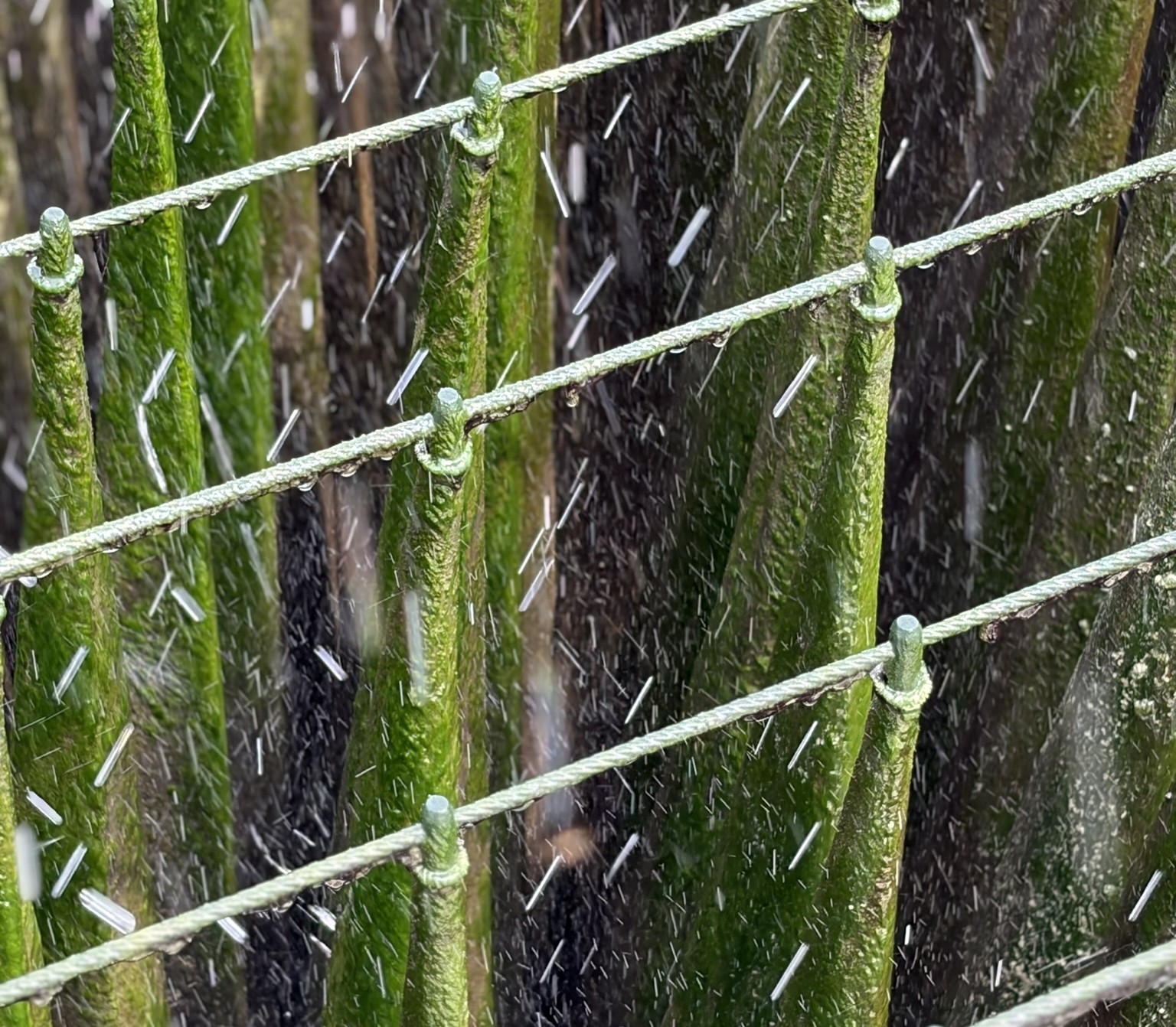
- The algae biofilm provides efficient nutrient uptake and can lower or eliminate the need for chemical dosing to meet discharge limits.
- Stationary carriers allow for mechanical simplicity and low cost of deployment.
- Optimized large surface area for low land requirement.
- Cone geometry to favor optimal use of sunlight independent of orientation.
- High capacity for CO2 capture from air.
- Algae biofilm harvested at high concentration that can be further processed into biofuels, biomethane, fertilizer, or bioplastics.
Our experienced engineers and project managers will work directly with you to determine your site requirements as well as any retrofit needs
- Tailored system design based on your facility’s flow rates, discharge limits, and site conditions.
- Integration into new or existing wastewater infrastructure.
- Retrofit assesments for facilities transitioning from conventional treatment facilities.
- Direct collaboration from initial site evaluation through to the startup phase.
One step closer to meeting your discharge limits
Let us take care of:
- Budget and timeline planning to align with your facility’s project schedule.
- Regulatory and permitting support to help meet local and state discharge requirements.
- Scalable design to accommodate future flow increases or expansion.
- Staff training on system operation and routine maintenance.
- Guidance on harvested biomass handling and end-use options (biofuels, fertilizer, bioplastics, etc.).
- Ongoing technical support after startup.

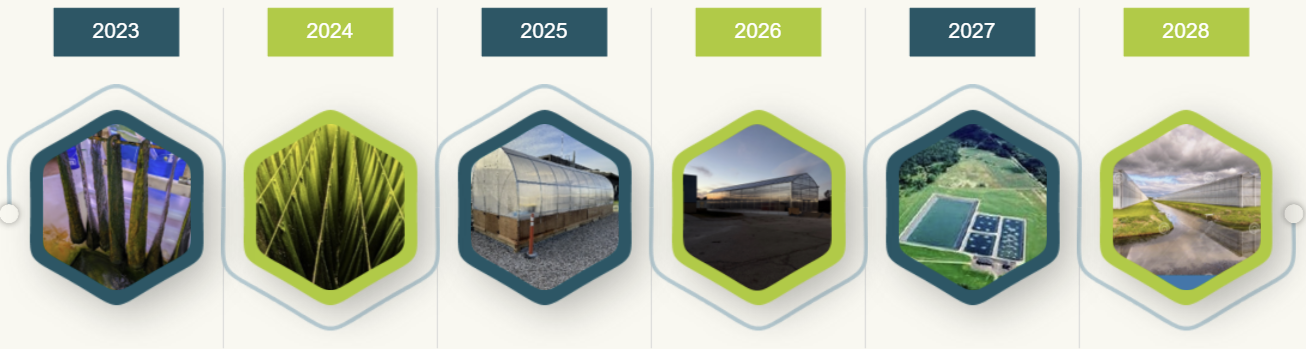
- Prototyping
- First 3 patents filed
- In-house and field pilot systems
- Prove treatment capacity
- Real world testing & validation
- Manufacturing scaleup
- Commercial demonstration
- First commercial projects
- Focus on small plant upgrades for ammonia, BOD & nutrients
- European market + new segments