

Curious what one of our pilot units looks like and how it works?

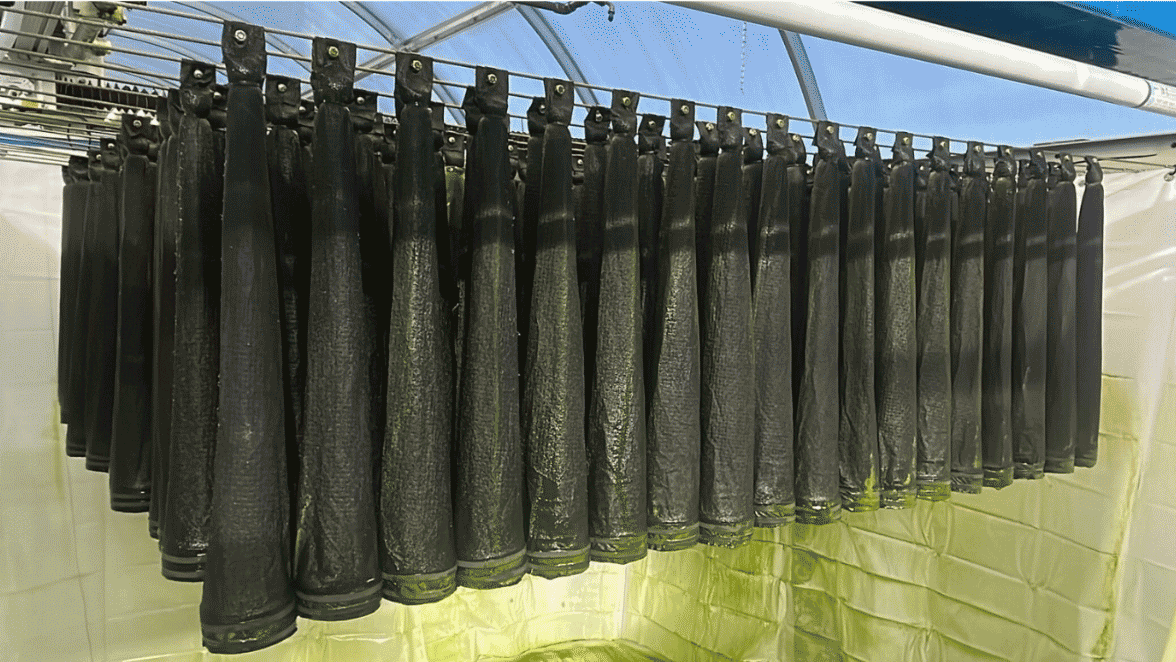
To demonstrate how our technology can be used to treat municipal wastewater, we have been running a pilot unit at the Metro Vancouver’s Annacis Research and Event Center. The system you see here is in a small hoop house and today is treating about 50 gallons/day of primary effluent (we plan to ramp up this loading rate as the pilot continues). Wastewater is irrigated over the cones, then collected by gravity and clarified prior to discharge. As you can see in the photo, our effluent is looking pretty good!
As shown in the table below, the average removal rates for the last 30 days for ammonia and turbidity (a proxy for total suspended solids) are very high at around 91-92%. Phosphate and total phosphorus removal has averaged 51% and 64%, respectively. The algae are also removing about 50% of the COD (a measure of organic matter) and total dissolved solids.
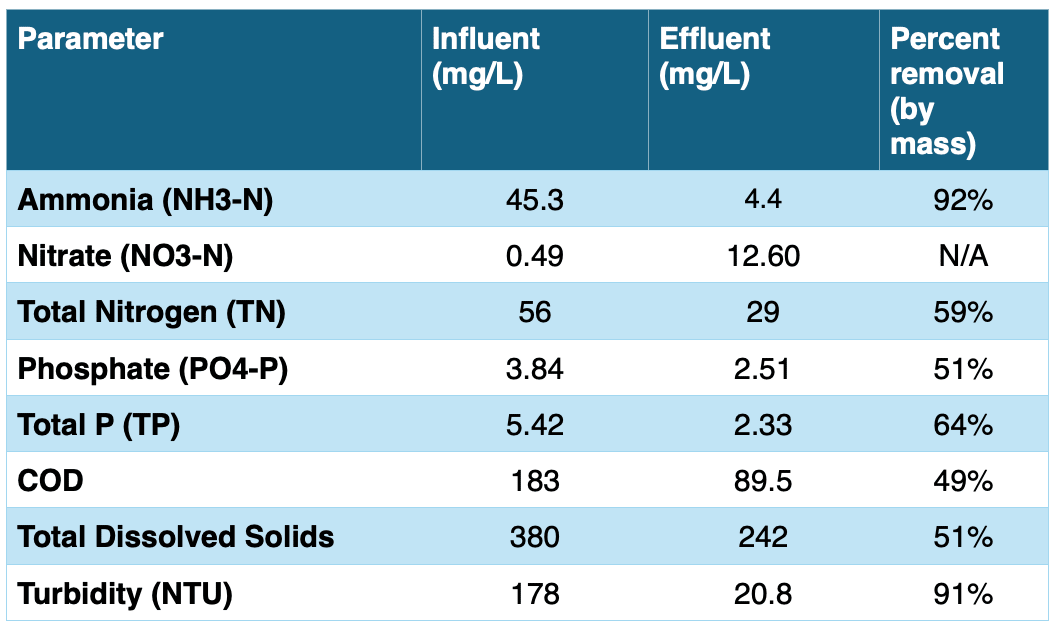
This kind of data collection on a relatively small pilot system is exactly what we need to do during piloting to understand how best to size our system for your wastewater. We have mobile demonstration units available that are easy to send to your location and we can provide operators to help run and maintain the system during its deployment. With the data we collect, we can accurately size a full scale system and make sure you get exactly what you need.
Thanks for taking the time to learn about our piloting! Please reach out to us to schedule a call to learn more about how we can address your wastewater needs.
